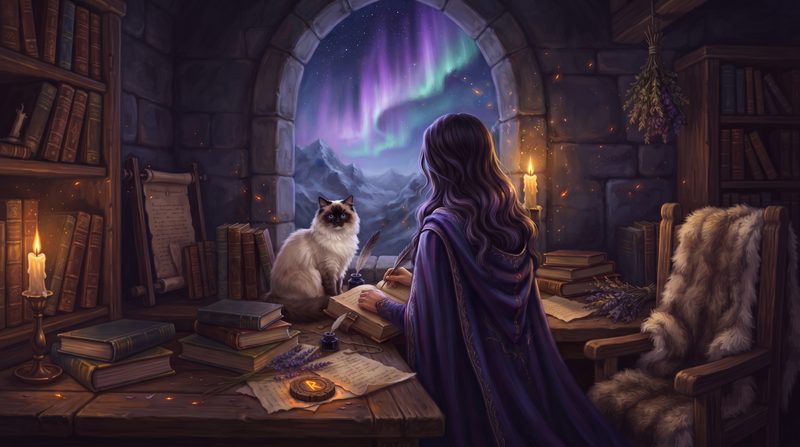
 Ink and Candles · The Room
Candles, a quill, and the aurora in the window.
Coming soon to YouTube
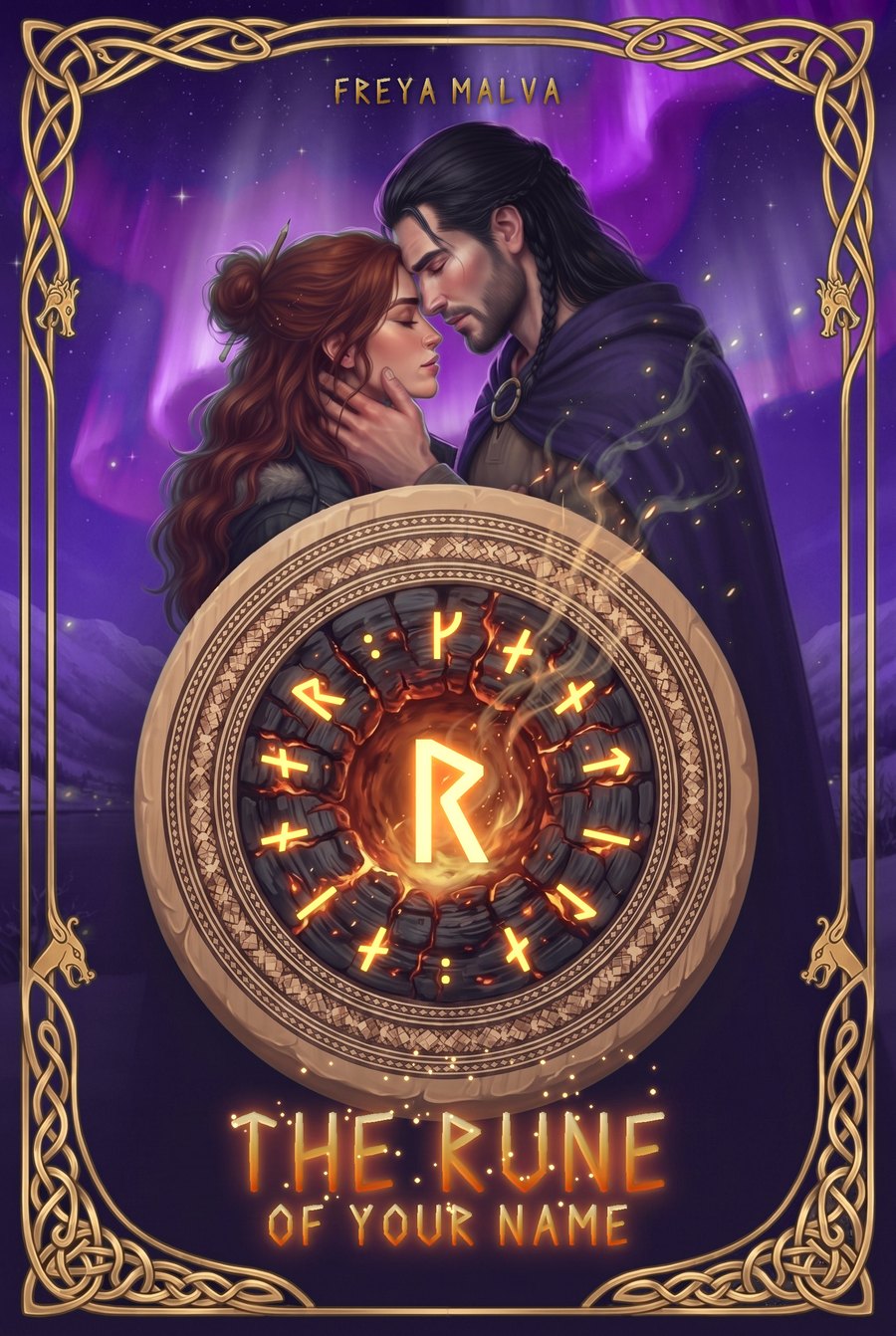
Time-travel romantasy
THE RUNE OF YOUR NAME
FREYA MALVA
She carved him a “hello.”
He answered from the year 1026.
In paperback and on Kindle, with full-color illustrations in the digital edition · Explicit content, for readers 18+.
THE BOOK
Candela is thirty-nine, with hands that make wood sing and an ex-husband who convinced her she’s made of ice. To prove to herself she can handle being alone, she spends the winter in a log cabin in the far north of Norway, where in December the sun never rises.
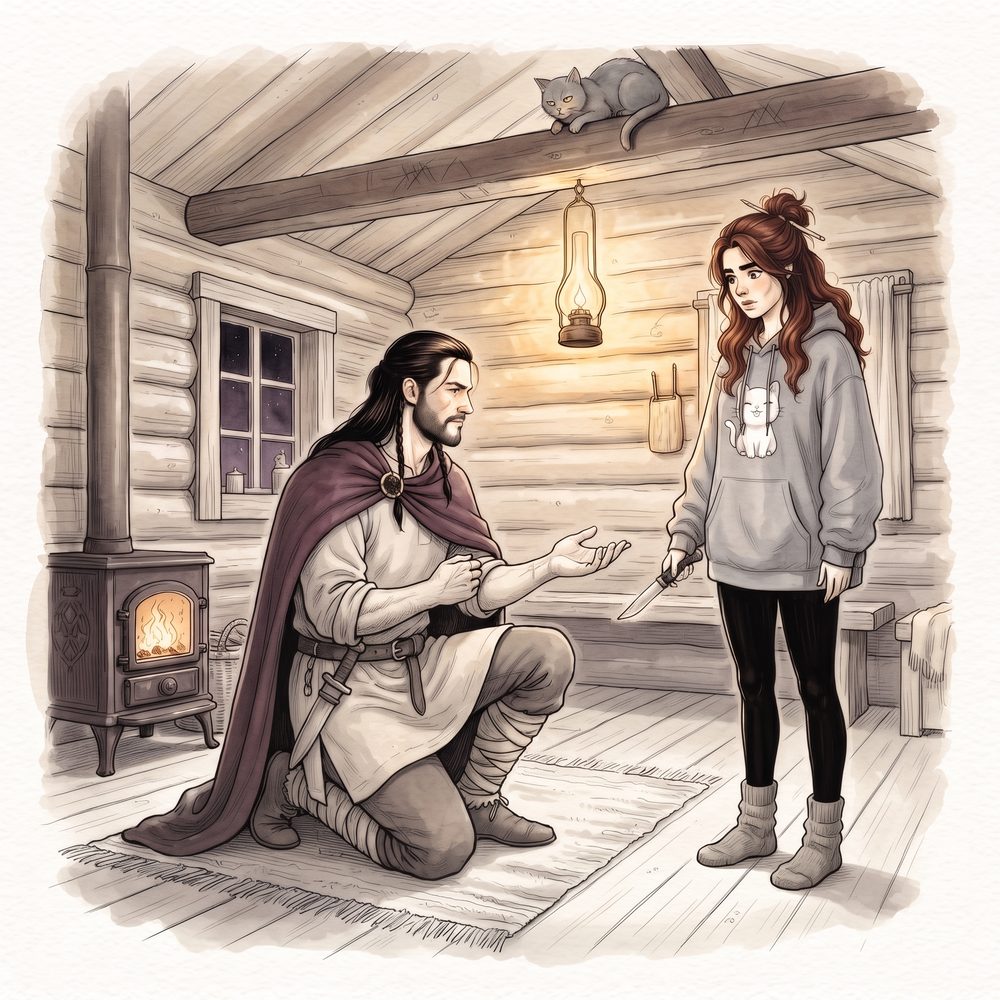
On the cabin’s beam, a name is carved in runes. One night, with a glass of wine and a pocketknife, Candela carves a “hello” beneath it.
By dawn, someone has answered.
It’s Einar, the shipbuilder raising that very house in the year 1026.
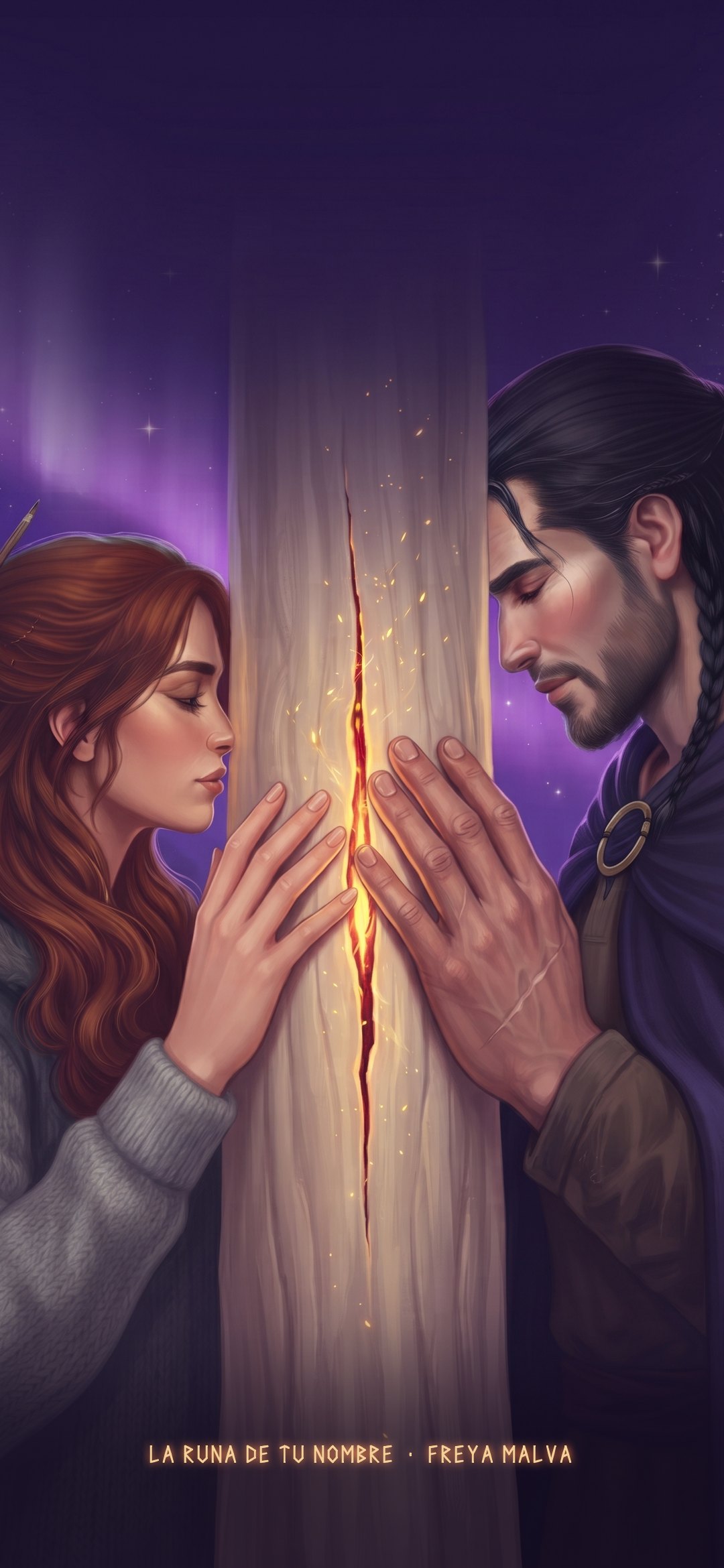
With sixteen runes, they learn to talk. When the polar night falls, the beam opens and they can touch. But crossing has a price: every visit cracks the wood and steals a memory. The beam can bear only nine crossings, and when the sun returns, the door will close forever.
And a legend of the fjord says the man who built that house never lived to see the spring.
A love story that burns through the longest night of the year.
THE FJORD
THE MAP OF MYRKFJORDEN
The fjord where the house stands, in both centuries. Tap the gold dots, and switch years to see what was there in 1026 and what’s there in 2026.
MYRKFJORDENTroms, in the far north of Norway
THE TRAILER
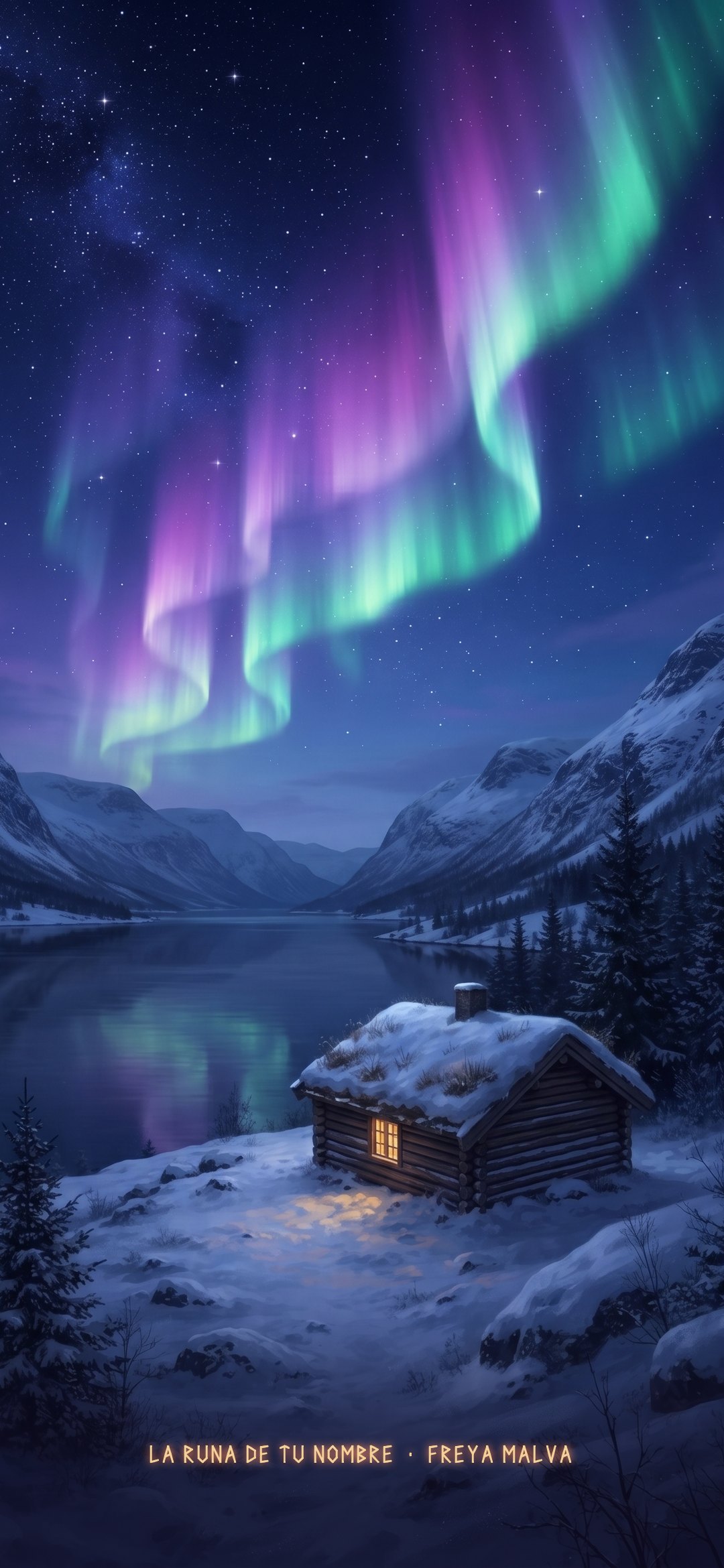
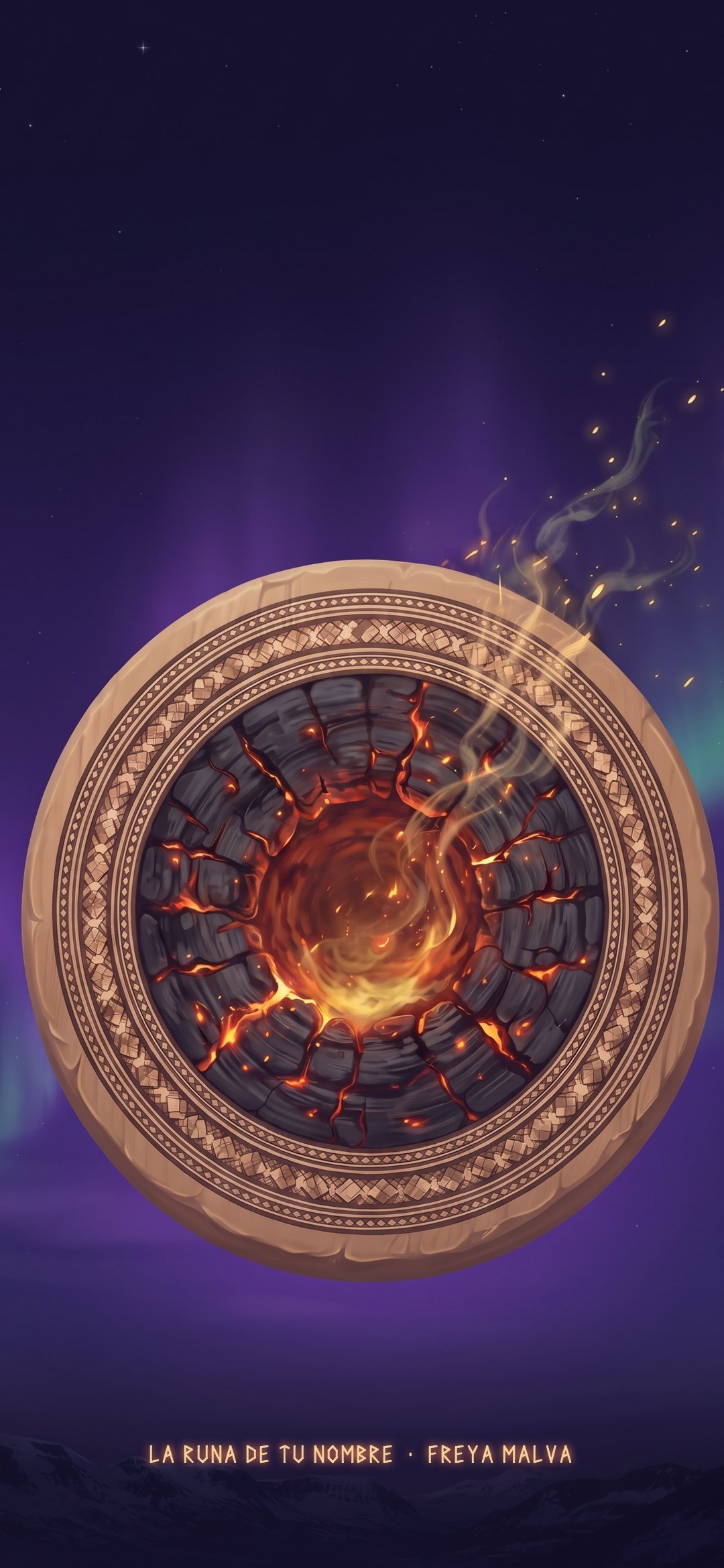
A log cabin under the aurora. A wheel of burned wood. Two people a thousand years apart.
The song is The Rune of Your Name, the book’s theme: every Freya Malva novel comes with its own soundtrack.
Turn up the volume.
THE MUSIC
THE BOOK’S ALBUM
Songs of Candela and Einar
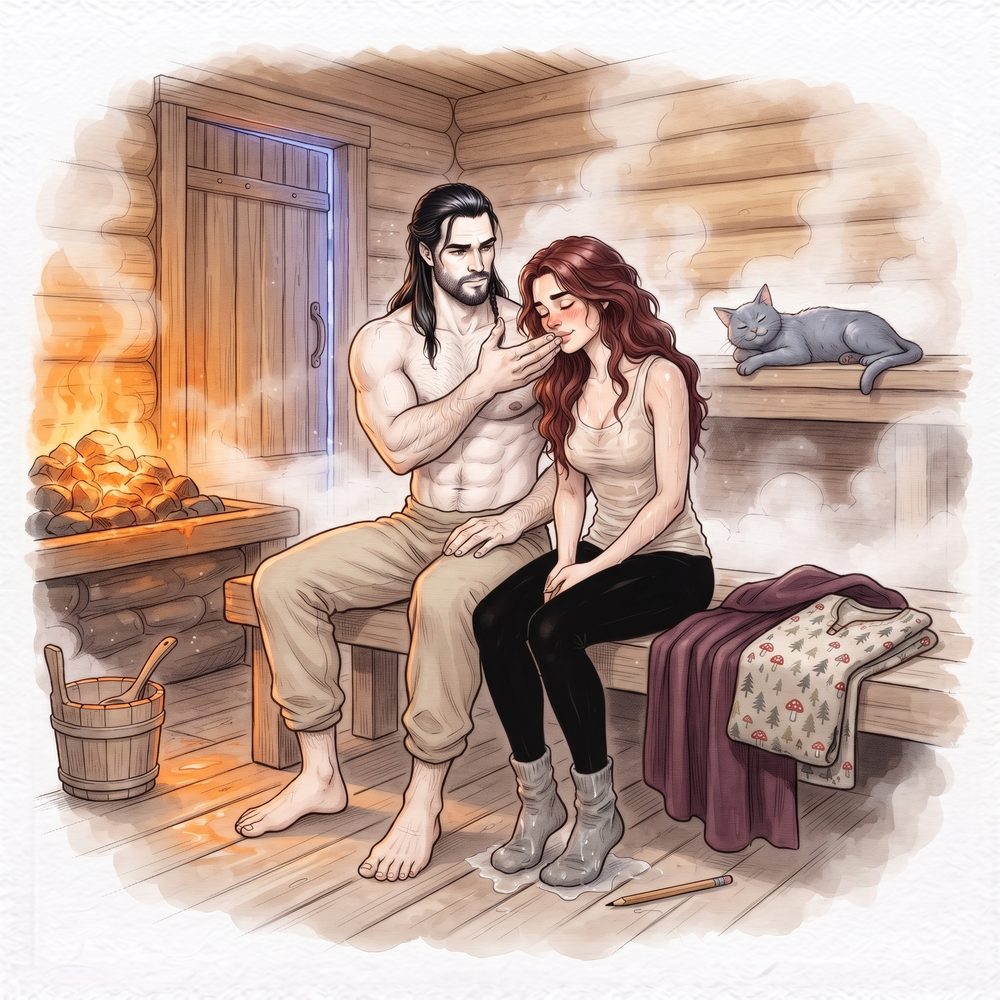
They don’t tell the story: they tell what it feels like. The first word carved into the wood, the steam of the bathhouse, a cloak that smells of him. Heart-to-heart songs, with his tagelharpa and drum and her cello.
- Polar Night
- Hula
- Your Name Sounds Like Fire
- The Open Hand
- Next Time I Won’t Stop
- Calor
- Sól
- Braids
- Carve Me
- Furs
- Mín
- Te Quiero, in Two Languages
And two more I’m keeping back until the book comes out.
Coming soon to SpotifyFREYA’S CORNER
Music to read by
A series of music to read by, made for Freya Malva’s books: soft piano, harp, cello, the north wind, and the crackle of the fire. No vocals and no drums, so nothing pulls you off the page. Each video is a full album that runs for hours, so you can leave it playing while you read, write, or rest.
Ink and Candles · The Room
Candles, a quill, and the aurora in the window.
Coming soon to YouTube
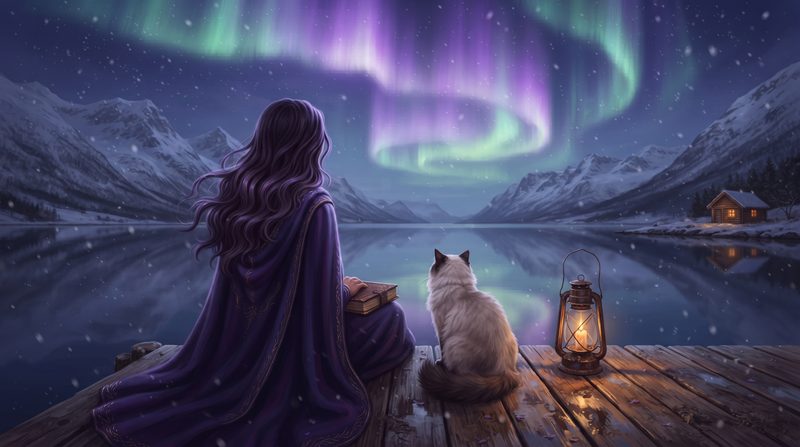 Beneath the Aurora · The Fjord
A dock, a lantern, and the aurora mirrored in the water.
Coming soon to YouTube
THE CHARACTERS

CANDELA
2026A guitar maker from Granada. She’s spending the winter in the far north of Norway to prove to herself she can handle being alone. Her name means fire, and she’s convinced she’s made of ice.

EINAR
1026A shipbuilder who won’t set foot on a ship anymore. He’s raising a house at the end of the last fjord in the world, and every night he carves a name into the beam.

RAGNA
2026Eighty-two years old, a knit cardigan, and an old Volvo. The owner of the house. She gives Candela the key and a single rule: the beam is not to be touched.

ÁSA
1026Einar’s sister-in-law. Serious, practical, with a nine-year-old son, Ketil, who never stops asking questions. She doesn’t like it one bit that Einar talks to the wood.

HEID
1026The völva of the fjord—that is, the seeress. So old nobody knows how old, smaller than a child, and wearing catskin gloves. She knows what the beam is.

MÁNI · LUNA
Both centuriesThe gray cat of the house, who slips from one century to the other and breaks every rule there is. Einar calls her Máni; Candela calls her Luna. Neither of them knows both names mean “moon.”
READ WITH ME
The Rune of Your Name takes place over a single winter: from November 22 to December 21, the longest night of the year, and it ends on the day the sun comes back. Read it in step with the story. Each day, a new square opens with what to read, the rune of the day, and a line from the book. And if you share it, tag it #ReadWithFreya.
THE EXTRAS
THE RUNE OF YOUR NAME
Type your name and see how Einar would carve it into the beam, with the sixteen runes of the Viking Age.
In the year 1026, there wasn’t a letter for every sound: C was carved as K, E as I, and O as U. That’s why, on the beam, Candela is KANTILA.
WHICH RUNE ARE YOU?
Five questions, and one rune out of the sixteen of the Viking Age. Each one has its own personality, and its own character in the book.
THE NORDIC CORNER
What lies behind the story: the mythology, the customs, and the northern winter, in small bites.
Runes
They were the alphabet of the Norse peoples before the Latin one. In the Viking Age, people used what’s called the Younger Futhark: just sixteen signs for every sound there was, so a single rune stood for u, o, and v. They were carved into wood, bone, or stone, in straight strokes, because curves don’t carve well with a knife.
In the book: Einar carves with those sixteen. Candela makes do with a little rune book she picked up at the airport.
The polar night
Above the Arctic Circle, in the depths of winter, the sun never makes it over the horizon. In Tromsø, that lasts roughly from late November to mid-January: at midday there are a few hours of blue light, and the rest is night. It’s also the best time of year to see the northern lights.
In the book: In the polar night there is no dawn, and that’s why the runes on the beam appear even as they’re being carved.
Jól
It was the great midwinter feast: the nights had grown endlessly long, and everyone celebrated the coming return of the sun. According to his saga, in the tenth century King Hákon the Good moved it to coincide with Christmas. That’s why, in Norwegian, Christmas is still called jul.
In the book: In 1026, Jól already falls at Christmas, and Ketil keeps asking when the sun is coming back.
The völva
Völvas were seeresses: women who traveled from farm to farm, read what was to come, and were as respected as they were feared. The saga of Erik the Red describes one with her staff, her blue cloak, and white catskin gloves with the fur on the inside. The most famous poem in Norse mythology, the Völuspá, means “the prophecy of the seeress.”
In the book: Heid, the völva of the fjord, wears those very gloves.
The Norns
They are the three women who decide the fate of gods and men: Urd, Verdandi, and Skuld. They live beside a spring, at the foot of the tree that holds up the worlds, and according to the Völuspá, they carved each person’s life into wood.
In the book: That’s why, on the beam, what you carve can change what has already happened.
The world ash
For the Norse, the whole universe rests on an immense ash tree, Yggdrasil, with nine worlds among its branches and roots. According to the Hávamál, Odin hung from the world tree for nine nights to wrest the runes from it.
In the book: The beam of the house is ash. And there are nine crossings.
Njörd and Skadi
Njörd was the god of the sea and of harbors; Skadi, a giantess of the mountains who hunted on skis. They married and couldn’t agree on where to live: they spent some nights in her mountains and others by his sea, and neither of them could bear the other’s world. They parted.
In the book: Einar tells Candela the story by the fire, like a bad omen.
The clinker-built ship
Viking ships were built from planks that overlapped one another like the scales of a fish, fastened with iron rivets, with wool soaked in tar packed into the seams to keep the water out. They were light and flexible, and as good on the open sea as on rivers.
In the book: Einar is the best shipbuilder in the north, and he won’t set foot on a ship.
Rune stones
They were raised in memory of someone, almost always with the same formula: “Thorir raised this stone in memory of Gunnar, his father” (or his brother, or his son). Thousands of them survive in Scandinavia, and many were once painted in bright colors, red above all.
In the book: In the meadow of the village near Candela’s cabin, there’s one that nobody can read.
Kenningar
Norse poets didn’t call things by their names: they used kenningar, two-word metaphors. A ship could be “the horse of the sea”; the sea, “the whale road”; blood, “wound water.”
In the book: Einar rarely uses them. When one slips out, it means something matters to him.
THE BOOK’S KITCHEN
What people eat in The Rune of Your Name, in both centuries. Something warm to hold while you read.
Dark bread with brown cheeseWhat Candela sends to Ása, wrapped in a bundle.
Into it she put what was left of the dark bread, a large piece of her brown cheese, which tastes of burnt milk and honey…
Ingredients
- Seeded rye bread, sliced
- Norwegian brown cheese (brunost), from Scandinavian food shops or online
- Butter
- Berry jam (or cloudberry jam, multe, if you can find it)
How to make it
- Toast the bread lightly, or leave it as is if it’s fresh.
- Spread it with butter.
- Slice the cheese very thin, with a cheese slicer if you have one: in Norway that’s how it’s eaten, almost see-through.
- Spoon the jam on top of the cheese. Sweet on sweet: it tastes like caramel.
Ragna’s fish ballsRagna’s fiskekaker, the ones she brings up to the cabin in a plastic container.
“I leave you the fish balls. Eat them warm.”
Ingredients
- 500 g (about 1 lb) white fish (cod or hake), skinless and boneless
- 1 teaspoon salt
- 2 tablespoons cornstarch
- 1 egg
- 150 ml (about ⅔ cup) milk or cream
- Nutmeg and white pepper
- Butter for the pan
How to make it
- Blend the fish with the salt until it turns into a sticky paste: the salt is what binds it.
- Add the cornstarch, the egg, the nutmeg, and the pepper, and keep blending.
- Pour in the milk a little at a time, until the mixture is soft but still holds its shape on a spoon.
- With a wet spoon, shape it into patties the size of your palm.
- Brown them in butter over medium heat, three or four minutes per side.
- Serve them the Norwegian way: with boiled potatoes, grated carrot, and melted butter poured over the top.
Ása’s breadA thin barley flatbread, like the ones baked in 1026 on a stone beside the fire.
“Today I have bread on the fire and the house without its sea-side roof.”
Ingredients
- 250 g (about 2 cups) barley flour
- About 150 ml (⅔ cup) lukewarm water
- ½ teaspoon salt
- 1 tablespoon melted butter
How to make it
- Mix the flour with the salt, the butter, and most of the water. Knead, adding the rest of the water if needed: you want a dough that doesn’t stick.
- Shape it into six balls and flatten them very thin, with your hands or a rolling pin.
- Cook them in a cast-iron skillet, very hot and with no oil, two or three minutes per side, until little toasted spots appear.
- Eat them warm, with butter or cheese. Ása would make them with whatever she had on hand: a little sour milk, a handful of oats.
Stovetop coffeeThe coffee Einar learns to make in Candela’s century, and always makes far too strong.
“Delicious,” I told him.
Ingredients
- A moka pot (the Italian stovetop kind that screws together)
- Water
- Ground coffee
How to make it
- Fill the bottom chamber with water up to the valve, and not a drop more.
- Fill the filter basket with coffee without packing it down; just level it off with your finger.
- Screw the pot together tightly and set it over medium heat, with the lid open.
- When it starts to gurgle, take it off the heat. If you leave it on, it tastes burnt.
- Einar’s version: the coffee packed down hard and the heat on high. It comes out thick enough to cut with a knife.
Jól mulled wineThe gløgg of a Norwegian Christmas, for the longest night.
Ingredients
- 1 bottle of red wine (or grape juice, for an alcohol-free version)
- 100 g (½ cup, packed) brown sugar
- 2 cinnamon sticks
- 6 cloves
- 6 cardamom pods, cracked open
- The peel of one orange
- A small piece of ginger
- Raisins and blanched almonds, to serve
How to make it
- Put everything except the raisins and almonds in a saucepan.
- Heat it very gently, without letting it boil, for about twenty minutes.
- Turn off the heat and let it steep, covered, for a while, so the spices give up all they’ve got.
- Strain it and serve it hot in small cups, with a few raisins and almonds in each one, to eat with a teaspoon.
THE ILLUSTRATIONS
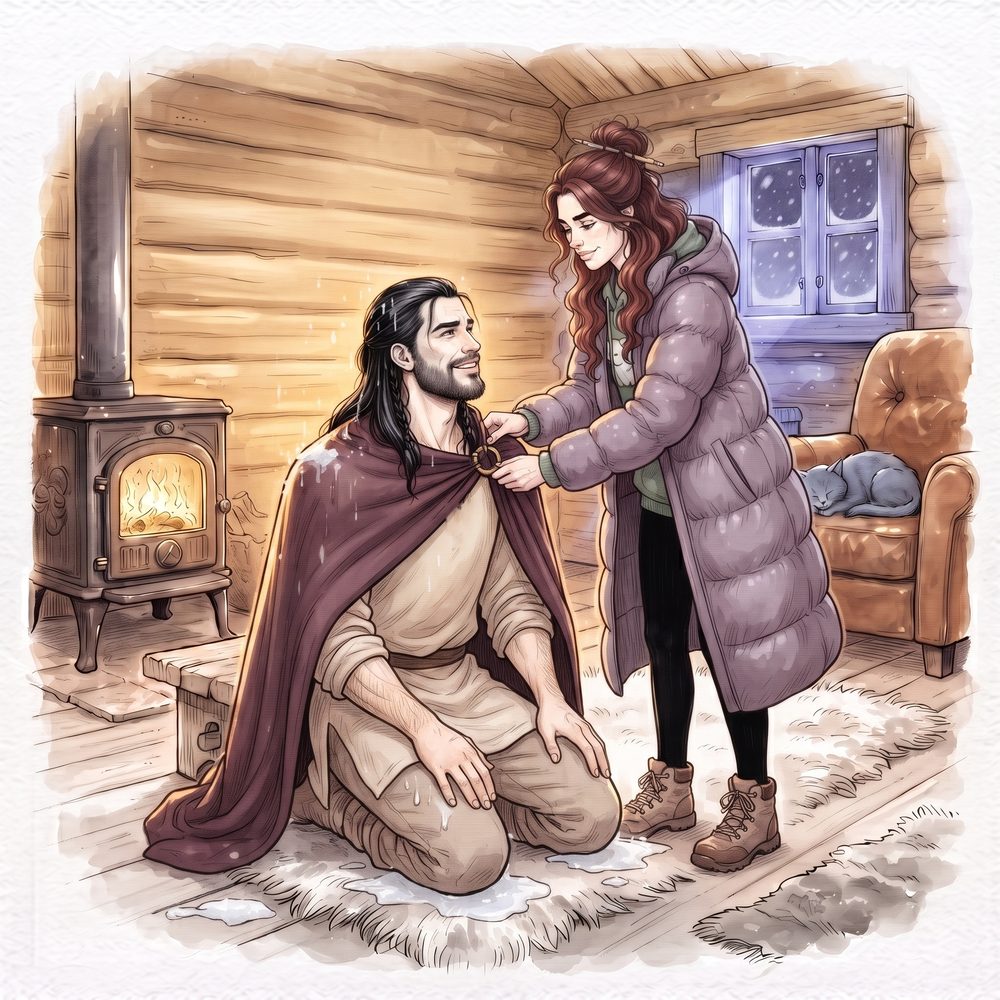
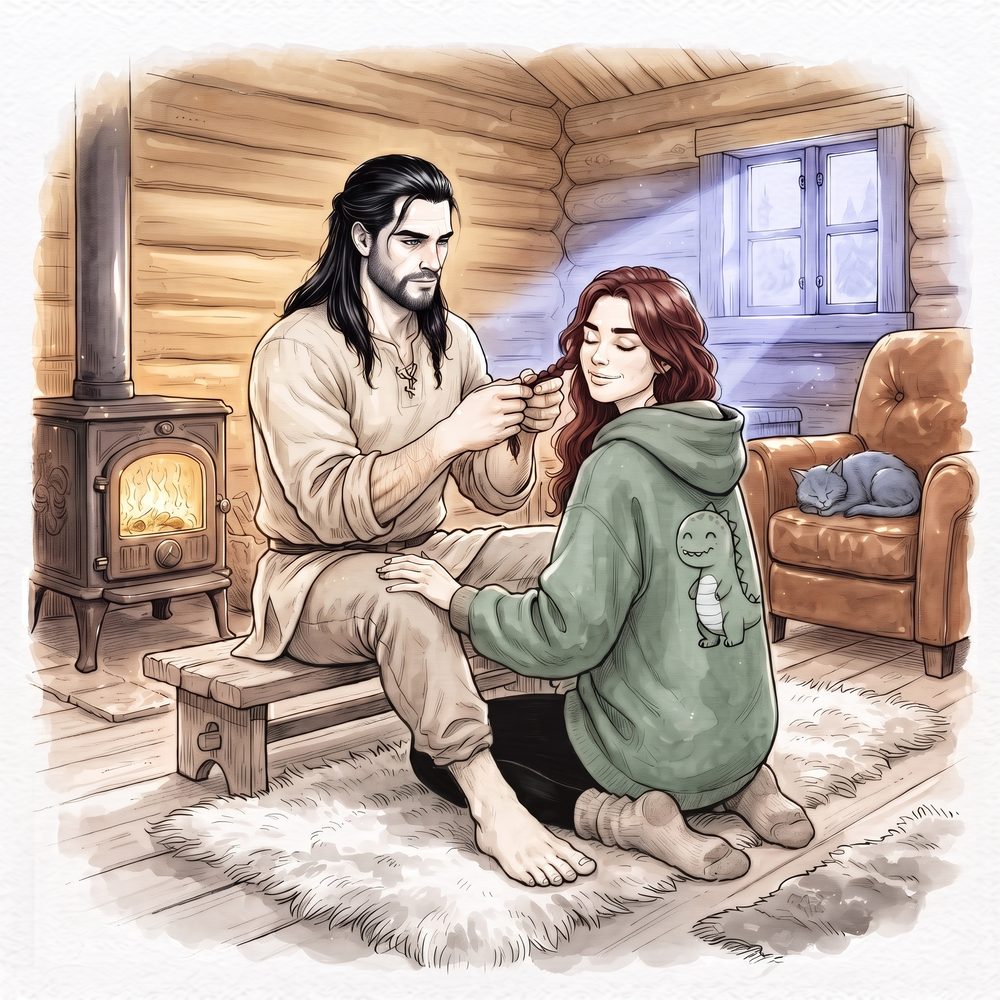
The book is illustrated. Here are a few of the plates; in the digital edition, they’re in full color.
WALLPAPERS
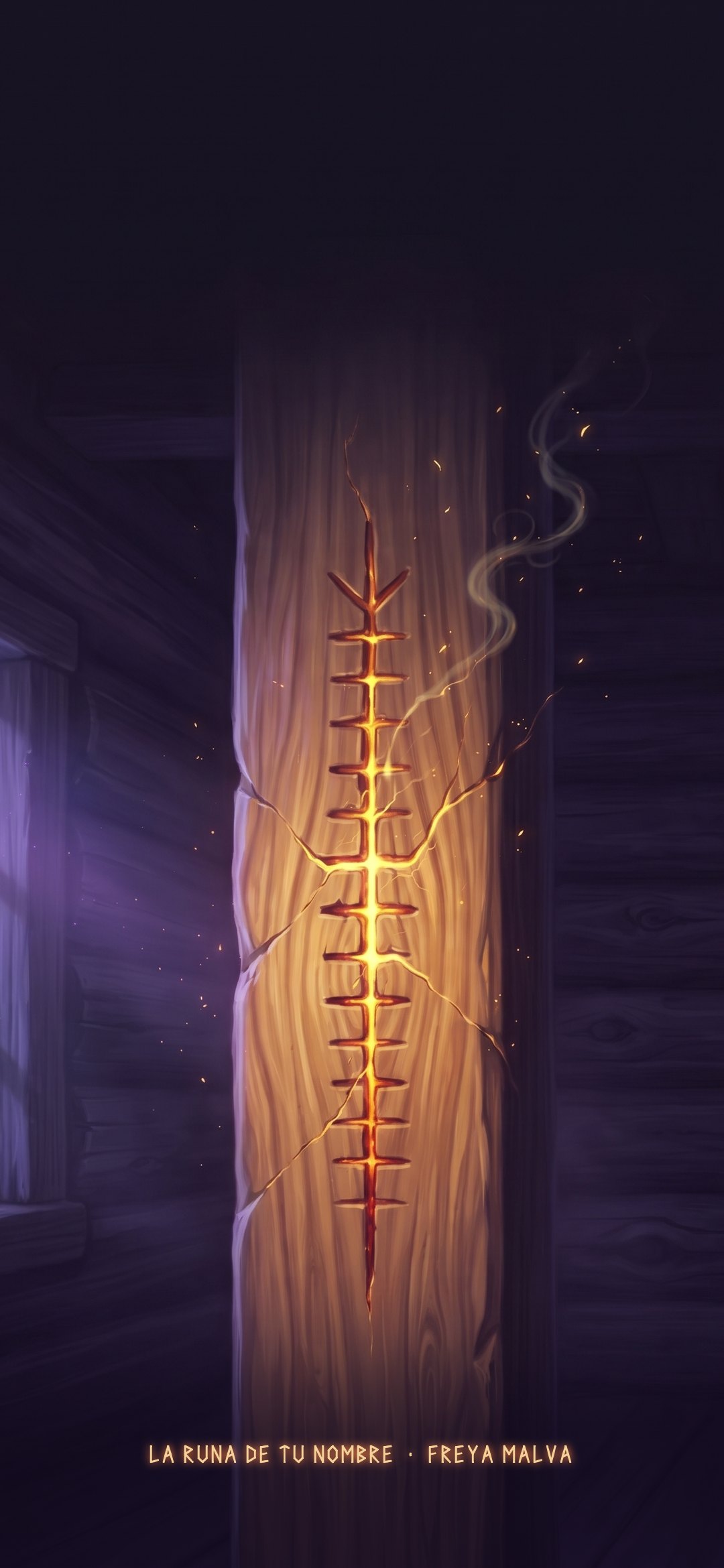
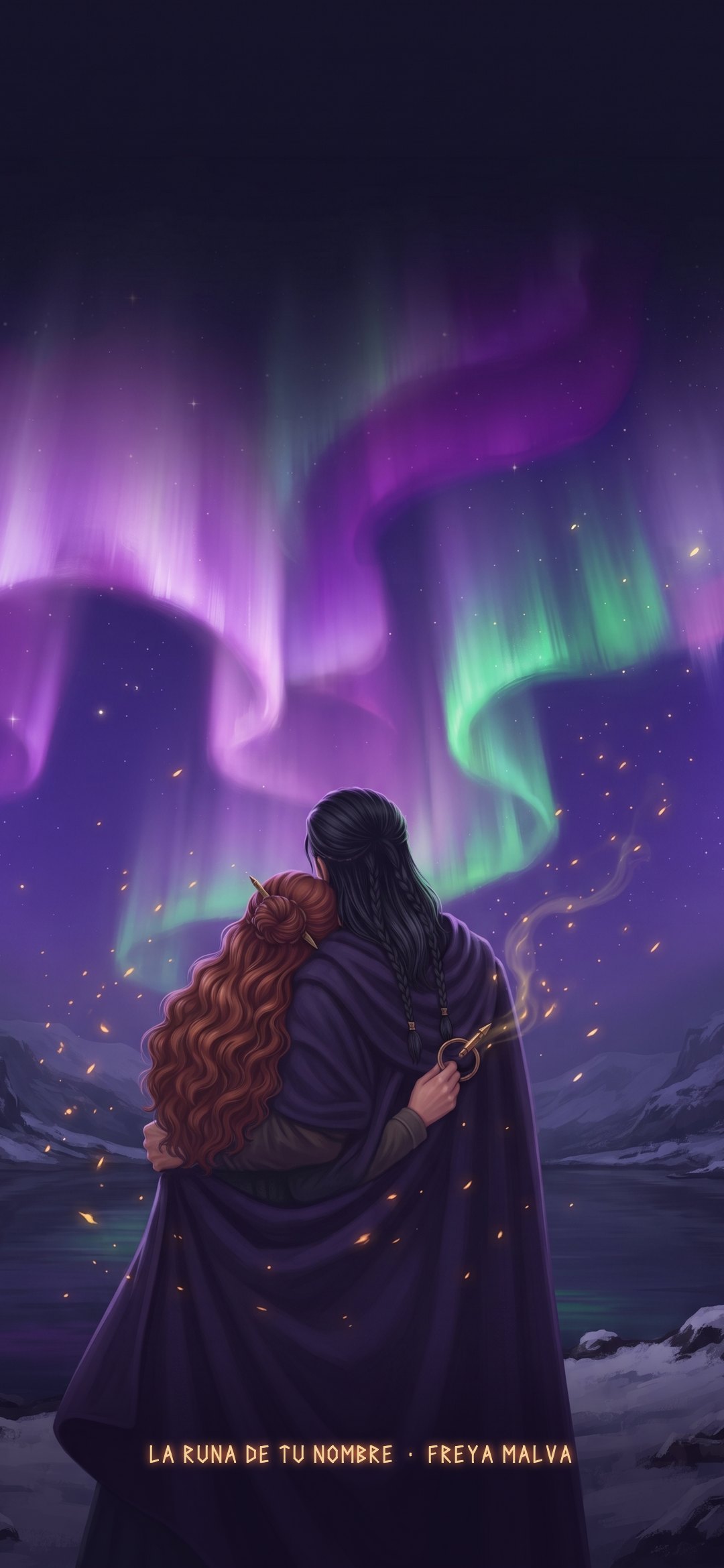
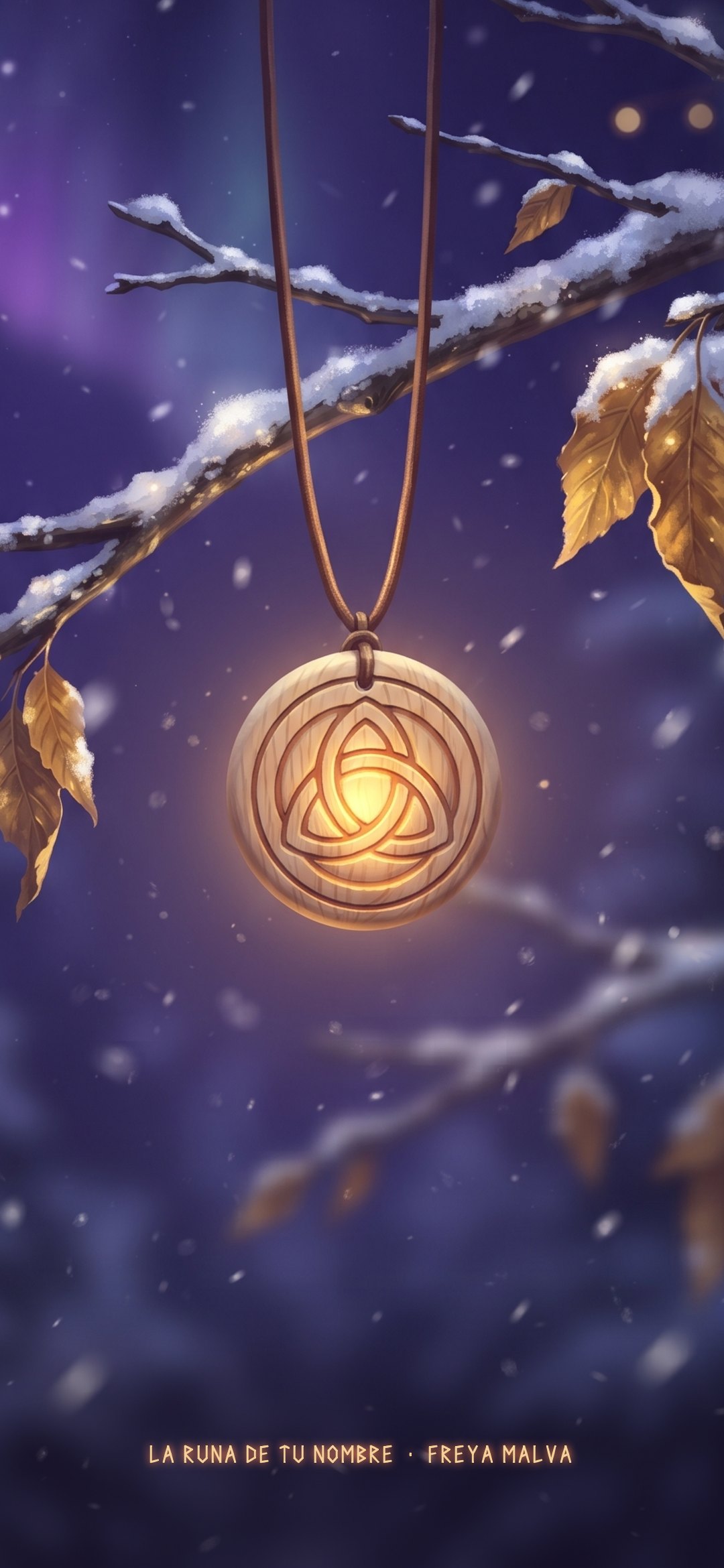
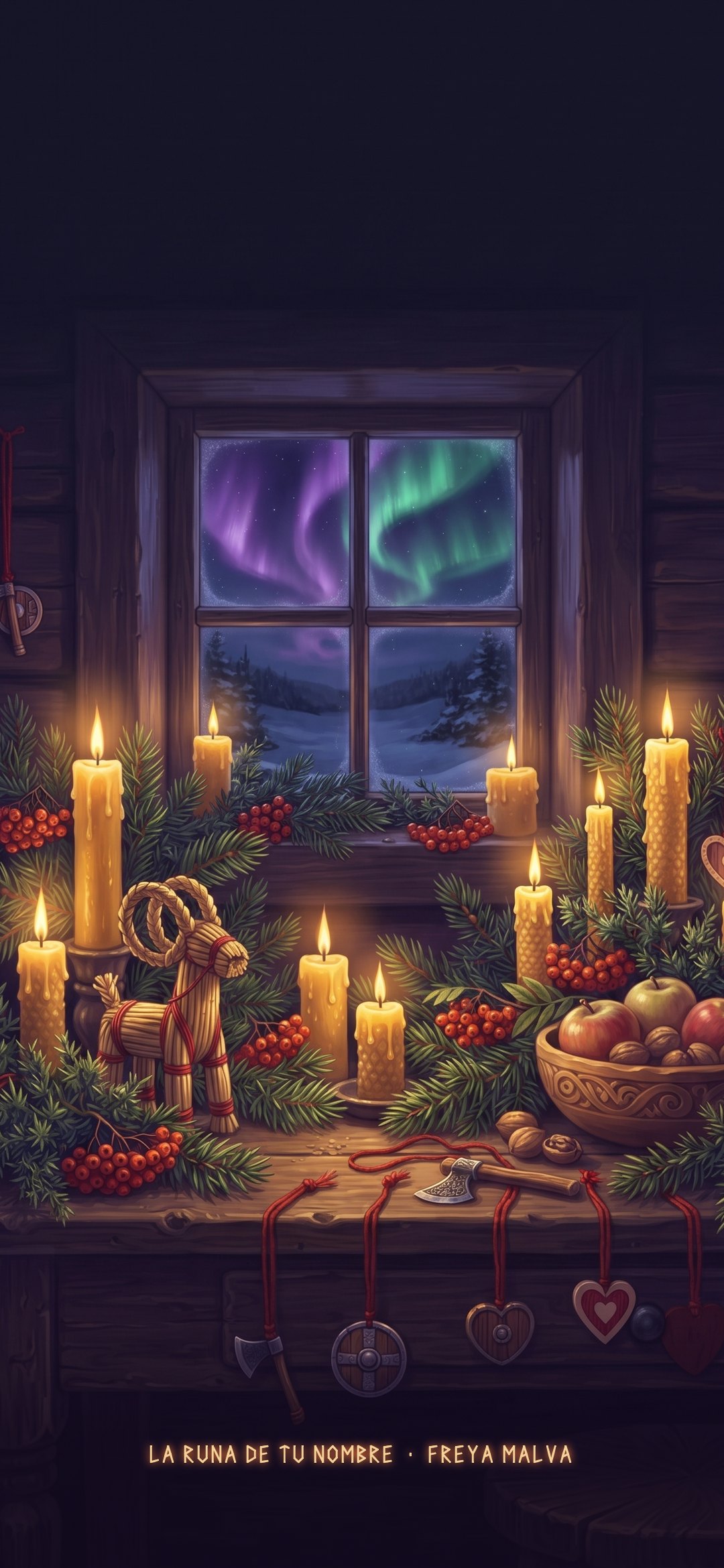
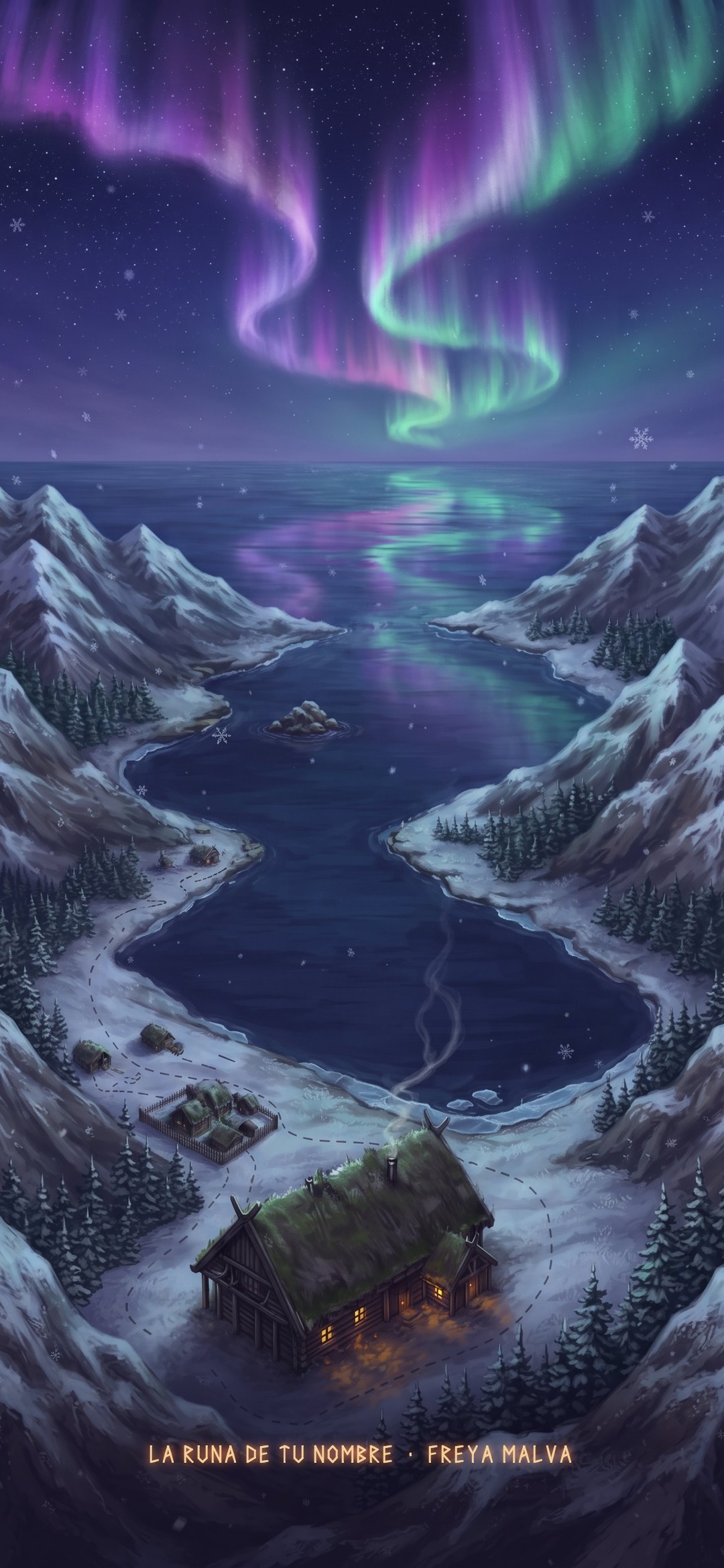
Take the fjord with you on your phone. Choose whether you want it with text (in Spanish) or without, then tap the image to download it, or press and hold to save it.
THE AUTHOR
I’m Freya Malva, and I write adult novels full of love, magic, and mystery. I love long winters, the smell of freshly cut wood, songs that get stuck in your head, and cats that climb where they shouldn’t. I took my name from one of my cats.
Each of my books comes with its own illustrations and its own soundtrack, because some stories won’t fit on paper alone.
The Rune of Your Name is my first novel. I hope you read it by the fire, with a blanket and a cat on your lap.
ARC READERS
Want to read The Rune of Your Name before anyone else? I’m looking for readers who’d like a free ebook copy a few weeks before release, in exchange for an honest review on Amazon and Goodreads on launch day.
- It comes as an EPUB, so you can read it on your Kindle, phone, or tablet.
- It has explicit sex scenes: for readers 18+ only.
- Your review doesn’t have to be positive—just honest.